Wales Animal Health and Welfare Framework Group (WAHWFG) – Report of Recommendations to the Welsh Government
Click to view report
In the Report the WAHWFG finds that the current Regulations for Dog Breeding in Wales are inadequate. The key recommendations include improved training for local authority inspectors of breeding establishments to enable more effective enforcement or regulations; a Registration system for all dog breeders; improved traceability of dogs through a national microchip database; an improved ratio in dog breeding establishments of one human to 10 adult dogs; a ban on the third party sale of dogs.
Ban of commercial third party sales of puppies and kittens in England: Summary of responses and way forward December 2018 – DEFRA
Click to view the report
This Report is based on a Defra consultation for the banning of the sale of puppies and kittens by anyone other than the person who has bred them. The consultation is based on the concern that commercial third party sales lead to poorer welfare conditions for the animals compared to when people buy direct from the breeder. Earlier separation of puppies from their mothers can lead to a lack of socialisation and habituation for puppies and an increased risk of disease. This method of sales is also likely to mean that genetic health screening on parent dogs has not been carried out by the breeder.
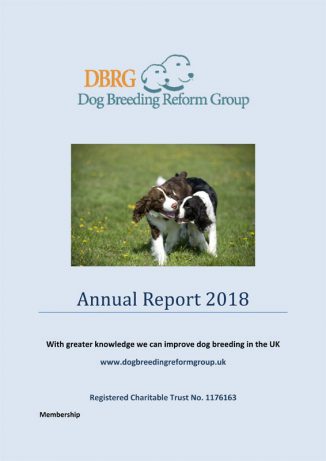
This is the second Annual Report since becoming a registered charitable trust. The Report summarises DBRG activities during 2018. These include the uploading of advice to puppy buyers and information about the BVA Canine Health Schemes on to the DBRG website. Through DBRG consultation responses, we have helped to bring about new regulations for dog breeding and a promise from the Government to ban the third party sale of puppies. DBRG’s work was recognised at the CEVA Animal Welfare Awards (Charity Team of the Year) and by being invited to be a collaborative partner of the International Partnership for Dogs (IPFD). DBRG also became an Associate Member of the Canine and Feline Sector Group. They have launched their Student Ambassador Scheme.
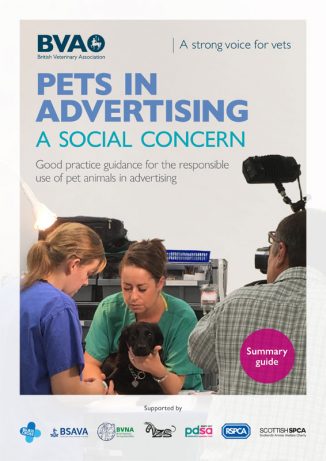
The BVA Report (November 2018) provides guidance for good practice in the use of animals in advertising. The Report is based on the five animals welfare needs described in the Animal Welfare Act 2006 and recommends that all animal imagery in advertising depicts pets in situations that meet their welfare needs. These needs are:
A suitable environment
A suitable diet
To be able to exhibit normal behaviour
Any need it has to be housed with or apart from, other animals
Its need to be protected from pain, suffering, injury and disease
The Animal Welfare (Licensing of Activities Involving Animals) (England) Regulations 2018: Guidance notes for conditions for breeding dogs – DEFRA
Click to view the report
These are the detailed Guidelines that accompany the new Regulations and are aimed at local authority inspectors in England . The Guidelines should be read in conjunction with the Regulations.
In order to gain a licence for Dog Breeding a business will need to meet all of the minimum standards outlined in this document. In addition, businesses are encouraged to apply higher standards in order to achieve a 4 or 5 Star rating. Of particular significance for the higher rating is the requirement for a record of lineage, including coefficient of inbreeding (COI), health testing for hereditary diseases and use of a Puppy Contract.
The Guidance Notes are a welcome development towards better welfare standards in Dog Breeding. The use of a star rated system of licensing will hopefully encourage more breeders to adopt even higher welfare standards. DBRG’s view is that all dogs used for breeding and their offspring deserve the very highest standards of care. These Guidance Notes are an important step towards that goal.
The Animal Welfare (Licensing of Activities Involving Animals) (England) Regulations 2018 – DEFRA
Click to view the report
This is the long awaited Regulations on the Licensing of Activities Involving Animals. The Regulations bring many more dog breeders under the local authorities licensing regime. Anyone who breeds three or more litters of puppies per year must be regularly inspected and obtain a licence from their local authority.
Schedule 6 provides Specific Conditions for the Breeding of Dogs. The Regulations stipulate that no puppy under the age of eight weeks may be sold and a puppy may only be sold if it is together with its biological mother. Puppies must be socialised and habituated to their future life as a pet. Female dogs used for breeding may only have one litter in a six month period and no more than 6 litters in total. Each puppy must be microchipped and registered to the breeder before it is sold. And crucially: ‘No dog may be kept for breeding if it can reasonably be expected, on the basis of its genotype and phenotype or state of health that breeding from it could have a detrimental effect on its health or welfare of that of its offspring.’
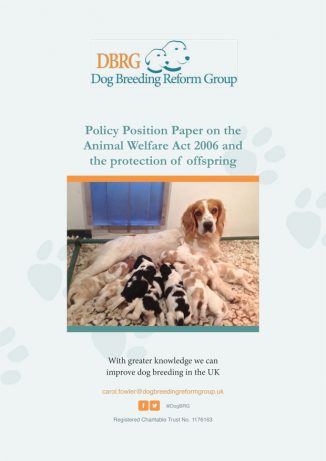
This Report suggests ways in which the Offspring of Dogs could be better protected under the existing Animal Welfare Act (2006) from inherited diseases and health and welfare problems due to extreme conformation. The Animal Welfare (Licensing of Activities Involving Animals) Regulations 2018 states that ‘No dog may be kept for breeding if it can reasonably be expected, on the basis of its genotype, phenotype or state of health that breeding from it could have a detrimental effect on its health or welfare or that of its offspring.’ In principle, therefore, such protection is enshrined in law. In practice, however, this condition will be difficult to enforce. This report makes recommendations as to how, in practice, this principle may be more easily enforced.
The revised Code of Practice for the Welfare of Dogs was published in 2017. The Code is based on the Animal Welfare Act 2006 and outlines the five welfare needs for a dog and an owner’s responsibility to fulfil those needs. These include: (a) need for a suitable environment (b) need for a suitable diet (c) any need a dog has to be to be kept with or apart from other animals (d) need to be able to exhibit normal behaviour (e) need to be protected from pain, injury, suffering and disease. The appropriate agents, such as local authorities, the police, or RSPCA may prosecute a person who does not provide these basic welfare needs for a dog.
This Report aims to help Breed Clubs and Breed Health Co-ordinators embark on a process designed to improve the overall health of their breed. Attention is paid to identifying the specific health problems of the breed and addressing in-breeding and genetic diversity.
This Report looks primarily at the state of well-being of the nations pets. It is structured around owners’ knowledge and application of the Animal Welfare Acts 2006 and the five Welfare Needs that are enshrined within them. It highlights the areas of well-being that still require improvement.. for dogs this includes obesity and insufficient exercise. The Report also finds that 24% of dogs are left alone for more than 5 hours a day and 24% of owners did not see the puppy with its mother.